If you have ever published a blog post and waited weeks for it to show up on Google, only to find it buried on page five, you already understand why on-page SEO matters. It is one of the most overlooked yet powerful parts of search engine optimization, and getting it right can make the difference between a page that ranks and one that quietly disappears into the internet.
In this guide, we will break down exactly what on-page SEO is, why it matters for beginners and small business owners alike, and how you can start applying it to your own website today, even if you have zero technical background.
What Is On-Page SEO?
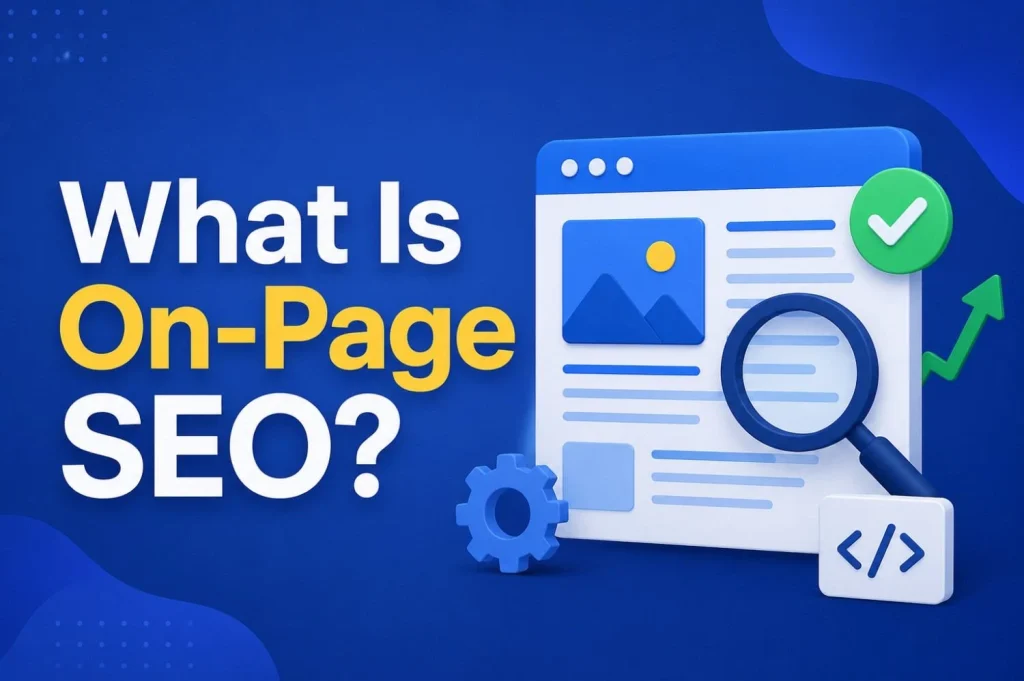
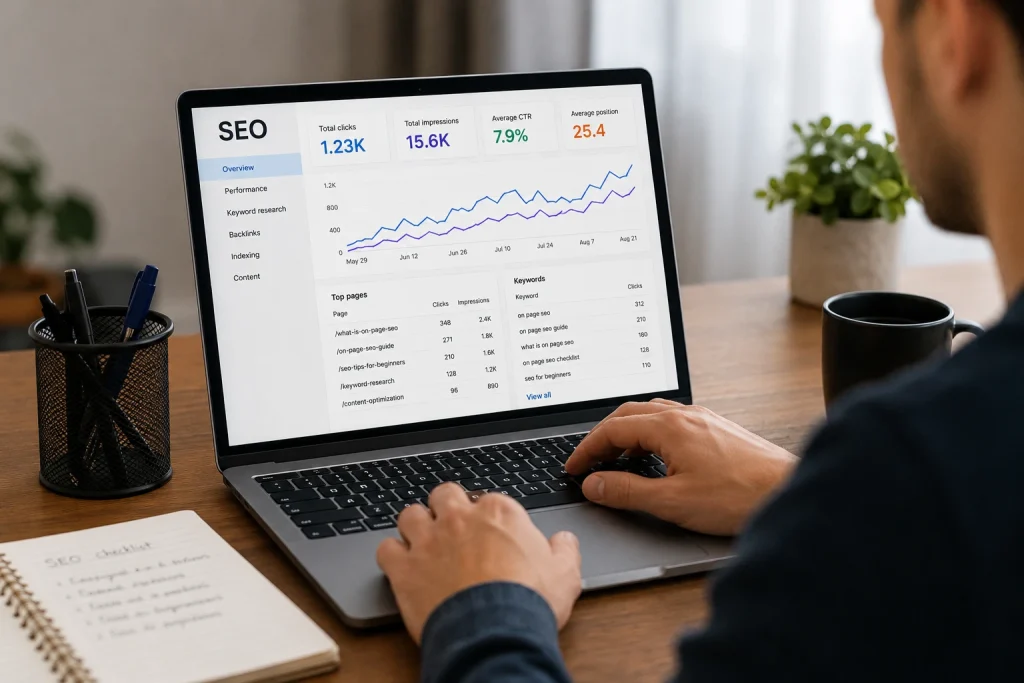
On-page SEO refers to all the optimization work you do directly on your website’s pages to help them rank higher in search engine results. This includes everything from your page’s content and headings to your images, URLs, and internal links.
Unlike off-page SEO, which focuses on external signals like backlinks and social shares, on-page SEO is entirely within your control. You decide what goes on the page, how it is structured, and how well it answers the searcher’s question.
Think of it this way: if your website were a physical store, on-page SEO would be everything inside the store, the layout, the signage, the product descriptions, and how easy it is for a customer to find what they need. Off-page SEO, on the other hand, would be word-of-mouth referrals and reviews from other people pointing customers toward your store.
Search engines like Google use hundreds of ranking factors to decide which pages deserve the top spots. A large portion of those factors live right there on your page, which is exactly why on-page SEO optimization deserves your attention from day one.
Why On-Page SEO Matters
Many beginners assume that SEO is only about backlinks or technical tricks. In reality, on-page SEO is often the first thing search engines evaluate when deciding how relevant your content is to a search query.
Here is why it matters so much:
- It helps search engines understand what your page is about
- It improves the user experience, which keeps visitors on your site longer
- It increases your chances of ranking for the keywords your audience is actually searching for
- It builds trust and credibility with both readers and search engines
- It supports every other SEO strategy you invest in later, including link building
For businesses in Bangladesh looking to compete in local and international search results, strong on-page SEO optimization is often the most cost-effective place to start, since it requires no paid tools or advertising budget. If you are also weighing whether to handle this in-house or hire help, it is worth understanding how much SEO typically costs in Bangladesh before making that decision.
Key Elements of On-Page SEO
Now that you understand what on-page SEO is, let’s look at the specific elements that make up a well-optimized page.
1. Meta Title and Meta Description
Your meta title and meta description are the first things a searcher sees on the results page, even before they click through to your website. A compelling title tag paired with a clear meta description can significantly improve your click-through rate.
Best practices include:
- Keep your title under 60 characters so it does not get cut off
- Include your primary keyword naturally near the beginning
- Write a meta description under 160 characters that summarizes the page and includes a reason to click
- Avoid stuffing keywords; write for humans first
For example, instead of writing “SEO Tips SEO Guide On Page SEO Tips 2026,” a better meta title would be “What Is On-Page SEO? A Beginner’s Guide.”
2. Keyword Optimization
Keyword optimization is about placing your target keywords in the right places without overdoing it. Search engines have become smart enough to detect keyword stuffing, and it can actually hurt your rankings rather than help them.
Focus on including your primary keyword and related LSI keywords in:
- The page title (H1)
- The first 100 words of your content
- At least one subheading (H2 or H3)
- Naturally throughout the body content
- Image alt text
The goal is to write for your readers first, then make small, natural adjustments so search engines can understand the topic clearly. Real-world results back this up too, in one case study, targeted keyword research for restaurant-related search terms helped a food brand generate over 500,000 impressions within months.
3. Heading Structure (H1, H2, H3)
A clear heading structure helps both readers and search engines navigate your content. Your H1 should contain your primary keyword and clearly describe the page. H2s break your content into major sections, while H3s can be used for subpoints within those sections.
This is not just good for SEO, it is good for readability too. Most readers skim content before deciding to read it fully, and a clean heading structure makes that skimming process easier.
4. SEO Content Optimization
SEO content optimization goes beyond simply inserting keywords. It means creating content that thoroughly answers the searcher’s question, is well organized, and provides real value.
A few things that improve content quality in the eyes of both readers and search engines:
- Short paragraphs that are easy to scan
- Use of transition words to improve flow
- Real examples, data, or personal insights
- Answering related questions the reader might have
- Updating old content regularly to keep it accurate
Google’s algorithms are increasingly focused on rewarding content that demonstrates real experience and expertise, not just content that technically matches a keyword. If writing consistently is not your strong suit, working with a professional SEO copywriting service can help bridge that gap without sacrificing quality.
5. Internal Linking Strategy
An internal linking strategy connects your pages together, helping both users and search engines discover more of your content. When done well, internal links:
- Keep visitors on your site longer
- Help distribute page authority across your website
- Make it easier for Google to crawl and index your pages
- Guide readers toward related, helpful content
For example, if you are writing a beginner’s guide to on-page SEO, linking to a related article about keyword research or technical SEO gives readers a natural next step, while also signaling topical relevance to search engines. You can see this strategy in action in real client work, such as this technical and on-page SEO case study that combined internal linking improvements with content strategy to drive measurable growth.
6. URL Structure
A clean, descriptive URL is a small but meaningful ranking factor. Instead of a URL like “yoursite.com/post?id=4521,” aim for something like “yoursite.com/what-is-on-page-seo.” Short, keyword-relevant URLs are easier for users to read and share.
7. Image Optimization
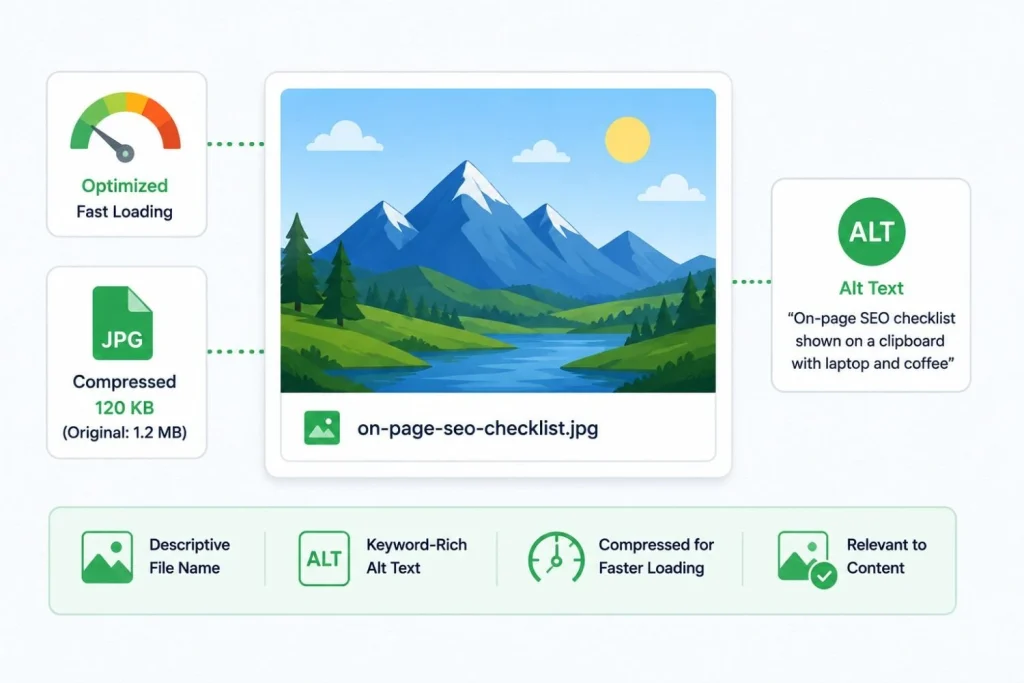
Images make your content more engaging, but they also need to be optimized. This includes:
- Compressing images so they load quickly
- Using descriptive file names instead of generic ones
- Adding alt text that describes the image and includes relevant keywords where natural
- Choosing images that genuinely support the content
8. Mobile Friendliness and Page Speed
While these are sometimes categorized separately, they directly affect on-page SEO. A page that loads slowly or does not display well on mobile devices will struggle to rank, no matter how good the content is. Since most searches now happen on mobile devices, especially across Bangladesh and other emerging markets, this factor cannot be ignored. Businesses that want ongoing help keeping these technical elements in check often turn to a monthly SEO service rather than a one-time fix.
Common On-Page SEO Mistakes Beginners Make
Even well-meaning beginners often make small mistakes that hold their pages back. Some of the most common include:
- Writing meta titles and descriptions that are too generic or duplicated across pages
- Stuffing keywords unnaturally instead of writing for readers
- Ignoring heading structure and dumping all content under one H1
- Forgetting alt text on images
- Not linking to other relevant pages on the same site
- Publishing thin content that does not fully answer the search query
Avoiding these mistakes alone can put you ahead of a large portion of competing pages.
How to Start Optimizing Your Page Today
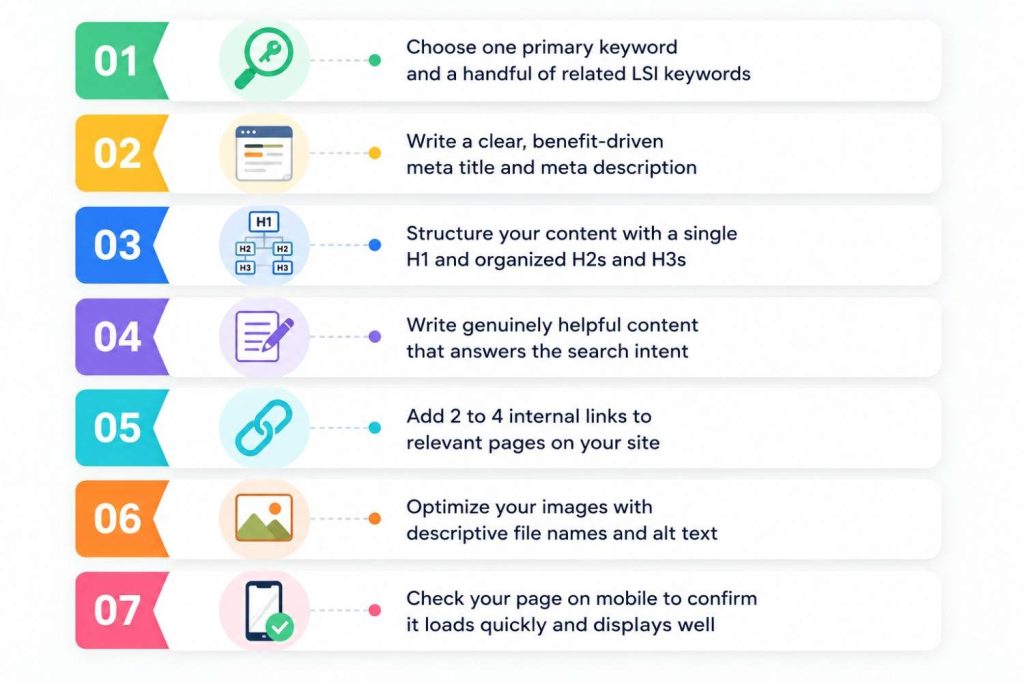
If you are just getting started, here is a simple order of operations:
- Choose one primary keyword and a handful of related LSI keywords
- Write a clear, benefit-driven meta title and meta description
- Structure your content with a single H1 and organized H2s and H3s
- Write genuinely helpful content that answers the search intent
- Add 2 to 4 internal links to relevant pages on your site
- Optimize your images with descriptive file names and alt text
- Check your page on mobile to confirm it loads quickly and displays well
Conclusion
On-page SEO is not a one-time task, it is an ongoing practice that shapes how well your content performs in search results. By focusing on the fundamentals such as meta titles, keyword optimization, heading structure, internal linking, and genuinely helpful content, you give your website the best possible chance to rank well and keep visitors engaged once they arrive.
The best part is that you do not need a large budget or advanced technical skills to get started. Small, consistent improvements to your on-page SEO can compound over time, helping your website build authority and visibility in search results. Start with one page, apply what you have learned here, and build from there.
If you would rather have an expert handle the strategy for you, you can explore real SEO case studies and results or learn more about working with an experienced SEO consultant to see what a tailored on-page SEO plan could look like for your website.
Frequently Asked Questions
What is on-page SEO in simple terms?
On-page SEO refers to the optimization techniques you apply directly on your website’s pages, such as content, titles, headings, and internal links, to help search engines understand and rank your page.
What is the difference between on-page and off-page SEO?
On-page SEO involves elements you control directly on your website, like content and meta tags. Off-page SEO involves external factors like backlinks and social signals from other websites.
How important is keyword optimization for on-page SEO?
Keyword optimization is important because it helps search engines match your content to relevant search queries, but it should always be done naturally to avoid keyword stuffing.
Do meta titles and descriptions really affect rankings?
While meta descriptions are not a direct ranking factor, they influence click-through rates. Meta titles, however, do play a role in helping search engines understand page relevance.
How many internal links should a blog post have?
There is no fixed number, but including two to four relevant internal links per post is a good starting point for most beginner and intermediate content.
Can good on-page SEO alone rank a website on page one?
On-page SEO significantly improves your chances, but it usually works best alongside other factors like site authority, backlinks, and technical SEO health.