If you have ever published a perfectly optimized page and still watched it sit on page three of Google, you already know that on-page SEO alone is not enough. Something is missing outside your website, and that something is off-page SEO.
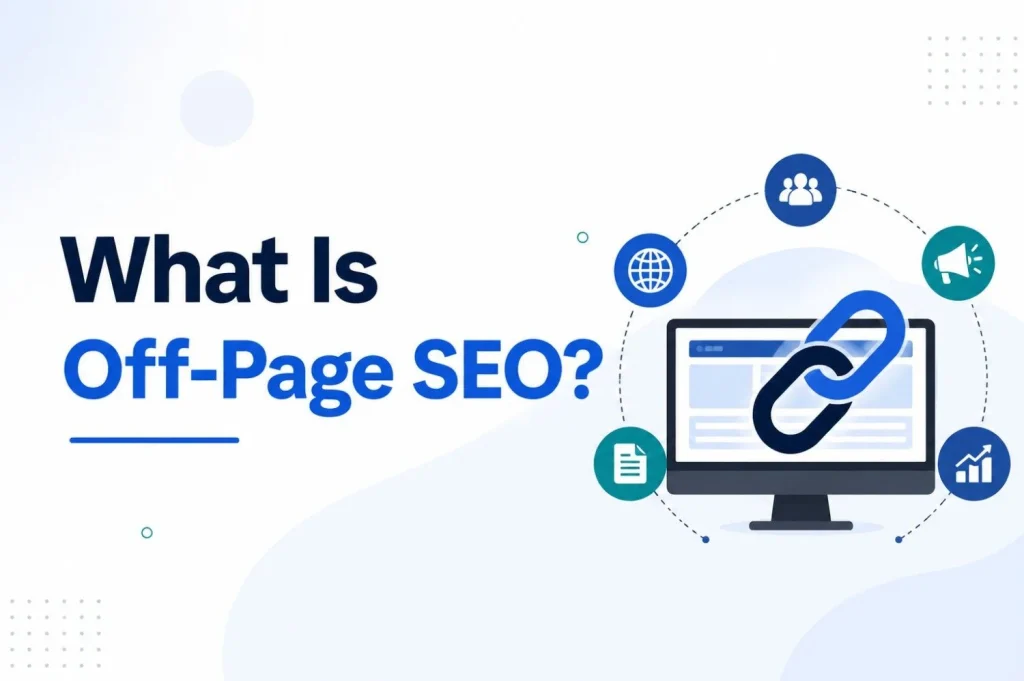
Off-page SEO is the part of search engine optimization that happens away from your own site. It includes everything from earning backlinks to getting mentioned on social media, being quoted by other websites, and building a reputation that search engines can trust. In short, it is how the internet vouches for you.
In this guide, we will break down what off-page SEO really means, why it matters so much for websites targeting Bangladesh and beyond, and which off-page SEO techniques are worth your time in 2026. You will also get a practical, step-by-step approach to backlink building built on genuinely helpful, trustworthy content, not shortcuts.
What Is Off-Page SEO?
Off-page SEO refers to all the activities you carry out outside your own website to improve its position in search results. Unlike on-page SEO, which focuses on things you control directly, such as titles, headings, and content, off-page SEO is about how the rest of the web perceives and interacts with your site.
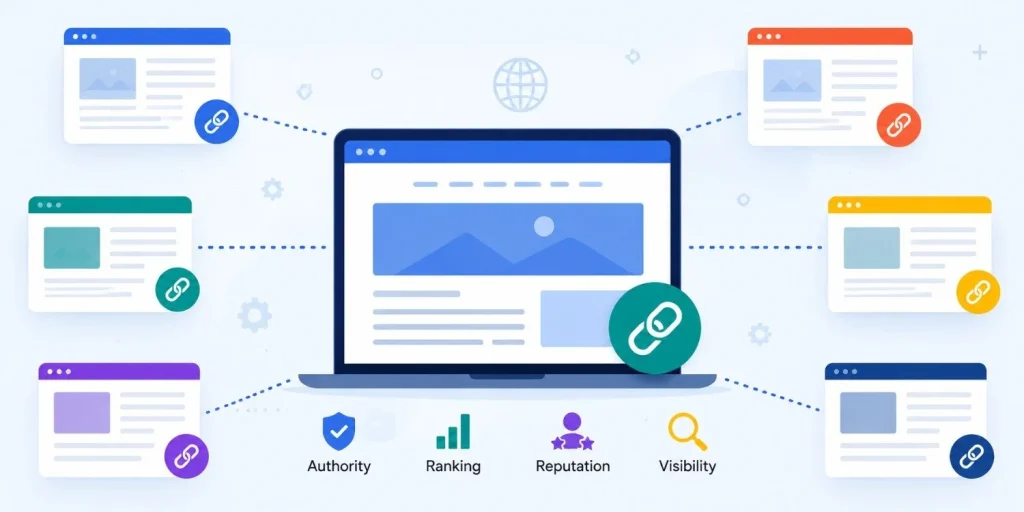
At its core, off-page SEO answers one question for Google: can other people vouch for this website? When trustworthy, relevant sites link back to you, or when people talk about your brand across the web, search engines take that as a signal of authority and trustworthiness.
Google has repeatedly said that it wants to reward content created for people, not just for search engines. Off-page signals help confirm that real people find your content useful enough to link to, share, or discuss.
Common off-page SEO activities include:
● Link building and backlink building
● Guest posting on niche-relevant blogs
● Social media promotion and engagement
● Brand mentions, even without a link
● Influencer and community outreach
● Local citations and directory listings
● Digital PR and press coverage
● Forum and Q&A participation
Why Off-Page SEO Matters for Your Website
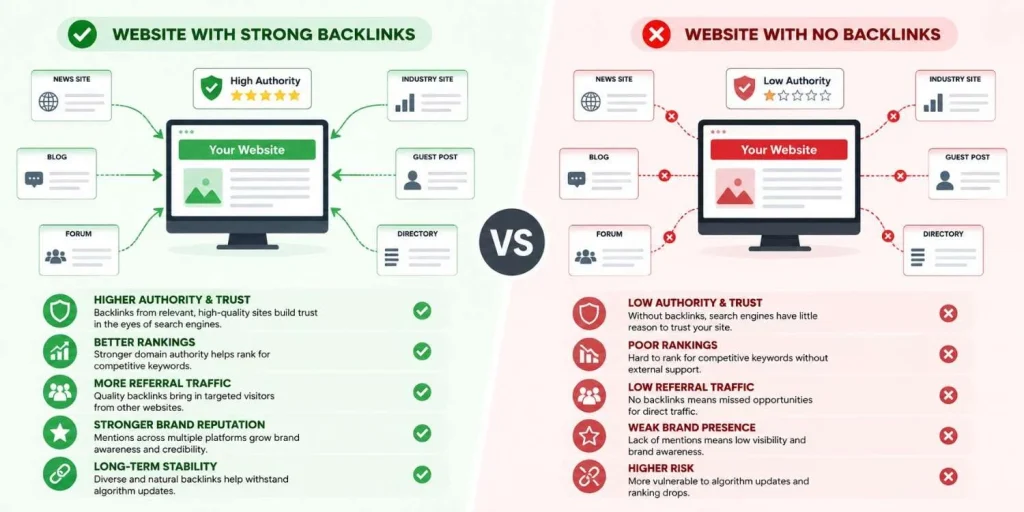
A well-optimized page without any off-page authority is like a great product sitting inside a shop nobody knows exists. You need people talking about it, recommending it, and linking to it before Google feels confident showing it to searchers.
Here is why off-page SEO optimization deserves a real budget and a real strategy:
It builds trust and authority. Search engines use backlinks and mentions as a vote of confidence. The more relevant, high-quality sites that reference you, the more Google trusts your content.
It improves keyword rankings. Even well-written content struggles to rank for competitive keywords without supporting backlinks, especially in industries where every competitor is also publishing quality content.
It drives referral traffic. A backlink from a popular blog does not just help your rankings. It also sends real visitors who are already interested in your topic.
It strengthens your brand’s online reputation. Repeated mentions across social media, forums, and industry publications shape how both users and search engines perceive your brand.
It supports long-term stability. Sites with a diverse, natural backlink profile tend to recover faster from algorithm updates than sites relying on thin content and no outside validation.
For businesses in Bangladesh trying to compete with international websites, off-page SEO is often the deciding factor between ranking on page one and staying invisible.
On-Page SEO vs Off-Page SEO: What Is the Difference
People often mix these two up, so let us clear the confusion in one table.
| On-Page SEO | Off-Page SEO |
| Happens on your own website | Happens outside your website |
| Includes titles, headings, content, internal links | Includes backlinks, mentions, social shares |
| Fully within your control | Depends partly on others |
| Focuses on relevance and structure | Focuses on trust and authority |
| Example: optimizing a meta description | Example: earning a backlink from a news site |
Both work together. On-page SEO tells search engines what your page is about. Off-page SEO tells them whether your page deserves to be trusted for that topic. You genuinely need both to compete for competitive keywords.
Off-Page SEO Techniques That Actually Work in 2026
Not every off-page tactic ages well. Some techniques that worked a decade ago can now get a site penalized. Below are the off-page SEO techniques that still deliver real, lasting results.
1. Link Building Through Guest Posting
Writing valuable articles for reputable blogs in your niche remains one of the safest and most effective link building methods. The key word here is relevant. A backlink from a random, unrelated website carries far less weight than one from a site that actually covers your industry.
When guest posting, focus on:
● Choosing sites with genuine traffic and engaged readers
● Writing original, useful content rather than filler
● Using natural anchor text instead of exact-match keywords every time
● Avoiding sites that exist only to sell links
2. Backlink Building From Digital PR and News Coverage
Getting featured in online news articles, industry roundups, or expert interviews earns backlinks that are extremely hard to replicate through outreach alone. Digital PR works by pitching a genuinely newsworthy story, a useful data set, or an expert quote to journalists and bloggers.
This is one of the reasons experienced SEO consultants build relationships with editors over time rather than sending one-off cold emails.
3. Social Media Signals and Sharing
While social shares are not a direct ranking factor in the way backlinks are, social media plays a strong indirect role. Content that gets shared widely reaches more people, and some of those people run websites or blogs. More visibility naturally leads to more organic backlink opportunities.
An active social presence also reinforces trust when someone researches your brand before linking to you or buying from you.
4. Brand Mentions Without a Link
Not every mention of your brand will come with a hyperlink, and that is fine. Google’s systems are capable of recognizing unlinked brand mentions as a trust signal, especially when your brand name appears frequently in relevant conversations, reviews, and articles.
Encouraging customers to mention your brand name in reviews, comparisons, and community discussions builds this kind of organic authority over time.
5. Local Citations and Google Business Profile Optimization
For businesses that serve customers in specific cities or countries, local citations matter a lot. Getting listed accurately on directories, maps, and local business platforms, with consistent name, address, and phone details, strengthens local search visibility significantly.
This is particularly important for service-based businesses in Bangladesh where local search competition is growing fast.
6. Influencer and Community Outreach
Reaching out to niche influencers, industry forums, and community groups can generate both direct traffic and natural backlinks. The goal is to add real value to these communities first, rather than only promoting your own content.
7. Forum and Q&A Participation
Answering questions on platforms like Quora or niche forums, with genuinely helpful responses, can build topical authority and occasionally earn referral traffic. Avoid spamming links; focus on being useful, and let the occasional relevant link happen naturally.
SEO Backlinks: Quality Always Beats Quantity
One of the most common mistakes beginners make is chasing the number of backlinks instead of their quality. A single backlink from an authoritative, relevant website can outperform a hundred low-quality links from spammy directories.
When evaluating a potential backlink source, consider:
Relevance: Does the linking site cover a topic related to yours?
Authority: Does the domain have real traffic, real content, and a good reputation?
Placement: Is the link placed naturally within the content, not stuffed in a footer or sidebar?
Traffic potential: Could this link realistically send visitors to your site?
Follow status: A healthy mix of followed and nofollow links looks natural to search engines.
Search engines have become very good at identifying manipulative link patterns, such as links from private blog networks or paid link farms. These shortcuts might offer a short-term boost, but they carry a real risk of manual penalties that can take months to recover from.
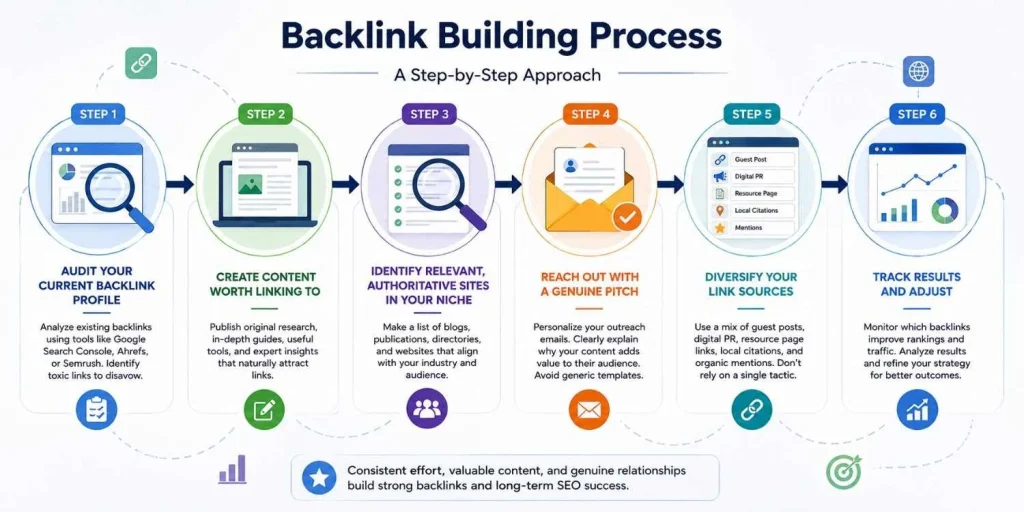
How to Build Backlinks the Right Way: A Step-by-Step Approach
Backlink building works best when it is treated as a long-term strategy rather than a one-time task. Here is a practical process that experienced SEO professionals follow.
Step 1: Audit your current backlink profile. Before building anything new, understand what you already have. Tools like Google Search Console, Ahrefs, or Semrush can show your existing backlinks and highlight any toxic ones worth disavowing.
Step 2: Create content worth linking to. This is the foundation. Original research, detailed guides, useful tools, and expert insights naturally attract links because people want to reference something valuable.
Step 3: Identify relevant, authoritative sites in your niche. Make a list of blogs, publications, and directories that align with your industry and audience.
Step 4: Reach out with a genuine pitch. Personalize your outreach emails. Explain clearly why your content adds value to their audience, and avoid generic mass templates.
Step 5: Diversify your link sources. Mix guest posts, digital PR, resource page links, local citations, and organic mentions rather than relying on a single tactic.
Step 6: Track results and adjust. Monitor which backlinks actually move rankings and traffic, and refine your approach based on what works.
This is essentially the same structured approach used in professional SEO case studies, where measurable link building campaigns are planned, executed, and tracked over months rather than days.
Off-Page SEO Optimization Mistakes to Avoid
Even experienced marketers fall into these traps. Watch out for:
Buying links in bulk. This almost always leads to unnatural link patterns that search engines can detect.
Ignoring relevance. A backlink from an unrelated industry rarely helps and can sometimes look suspicious.
Over-optimized anchor text. Using the exact same keyword-rich anchor text repeatedly looks manipulative rather than natural.
Neglecting social proof. Off-page SEO is not only about backlinks. Reviews, mentions, and social engagement all contribute to authority.
One-time campaigns. Off-page SEO optimization needs consistency. A single burst of link building followed by months of inactivity rarely sustains rankings.
Ignoring local signals. Businesses targeting Bangladesh specifically should not skip local directories and location-based citations.
How to Measure Off-Page SEO Success
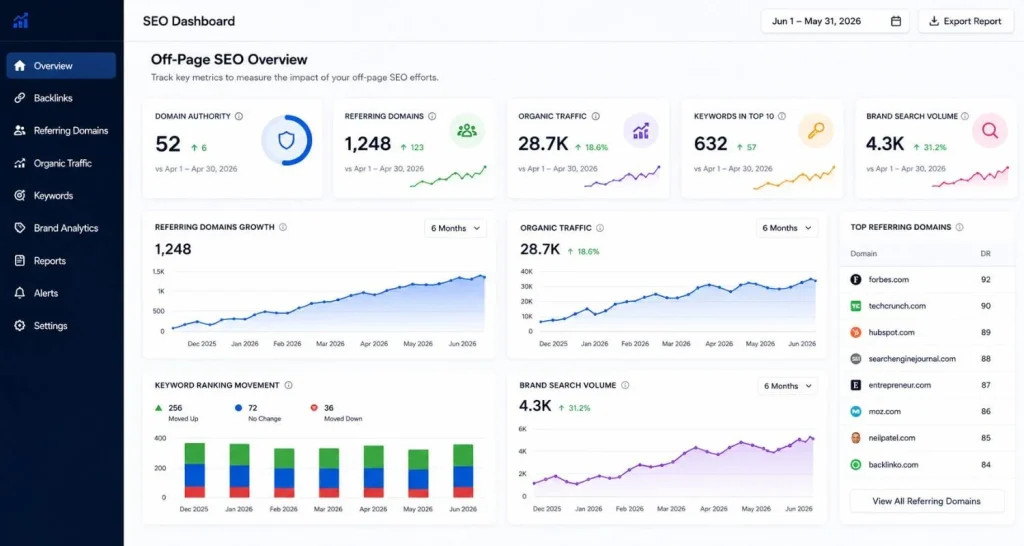
Off-page SEO is not something you do blindly. Track these metrics regularly:
Domain authority or domain rating: A general indicator of your site’s overall backlink strength.
Referring domains: The number of unique websites linking to you, which matters more than total link count.
Organic traffic growth: The real-world outcome you are ultimately chasing.
Keyword ranking movement: Track whether target keywords are climbing after specific link building campaigns.
Brand search volume: Rising searches for your brand name often indicate growing awareness from off-page efforts.
Reviewing these numbers monthly helps you understand which off-page SEO techniques are genuinely paying off.
Off-Page SEO Checklist for 2026
Before wrapping up, here is a quick checklist you can revisit whenever you plan a new campaign:
● Audit existing backlinks and disavow toxic ones
● Publish link-worthy, original content regularly
● Pursue guest posting on relevant, quality sites
● Build and maintain local citations
● Stay active on relevant social platforms
● Monitor and encourage genuine brand mentions
● Track referring domains and organic traffic monthly
● Avoid shortcuts like link farms or bulk-bought links
If you would rather have this handled by someone with a decade of hands-on experience, you can explore how a professional SEO expert in Bangladesh approaches on-page, technical, and off-page strategies together, or read more about the process and experience behind these results.
Conclusion
Off-page SEO is not a one-time task you check off a list. It is an ongoing effort to build genuine trust, relevance, and authority across the web. From smart link building and thoughtful guest posting to local citations and brand mentions, every off-page SEO technique works best when it feels natural rather than forced.
If you focus on creating content worth linking to and building relationships instead of chasing shortcuts, your backlink profile will grow in a way that search engines reward rather than penalize. Combine that with solid on-page SEO, and you give your website a real, sustainable shot at ranking where it deserves to be.
Need help putting this into practice? You can get in touch for a personalized SEO consultation or browse proven strategies from top SEO experts to see what a results-driven off-page SEO campaign looks like in action.
Frequently Asked Questions
What is off-page SEO in simple words?
Off-page SEO is everything you do outside your own website to improve how search engines and users perceive your site’s authority and trustworthiness, mainly through backlinks, mentions, and social signals.
What is the difference between on-page and off-page SEO?
On-page SEO involves optimizing elements within your own website, such as content and meta tags. Off-page SEO involves external factors like backlinks, brand mentions, and social engagement that happen outside your website.
How many backlinks do I need for off-page SEO to work?
There is no fixed number. A handful of high-quality, relevant backlinks usually outperforms hundreds of low-quality ones. Focus on relevance and authority rather than chasing a specific count.
Is off-page SEO still important in 2026?
Yes. While search engines have become smarter about evaluating content quality, backlinks and brand authority remain some of the strongest trust signals for ranking competitive keywords.
Can I do off-page SEO without link building?
Link building is a major part of off-page SEO, but not the only part. Social media engagement, brand mentions, local citations, and digital PR all contribute even when a direct link is not involved.