

How Yamaha BD Grew Organic Traffic 50X in 6 Months: A Real SEO Case Study

Yamaha BD Logo
Service
Search Engine Optimization
Industry

Bike


Year
From October 2025 To April 2026
Live website

https://www.yamahabd.com/

Overview

This case study breaks down how Yamaha BD (Yamaha Motor Bangladesh) transformed its organic search performance within just six months using a structured SEO approach powered by insights from Google Search Console.
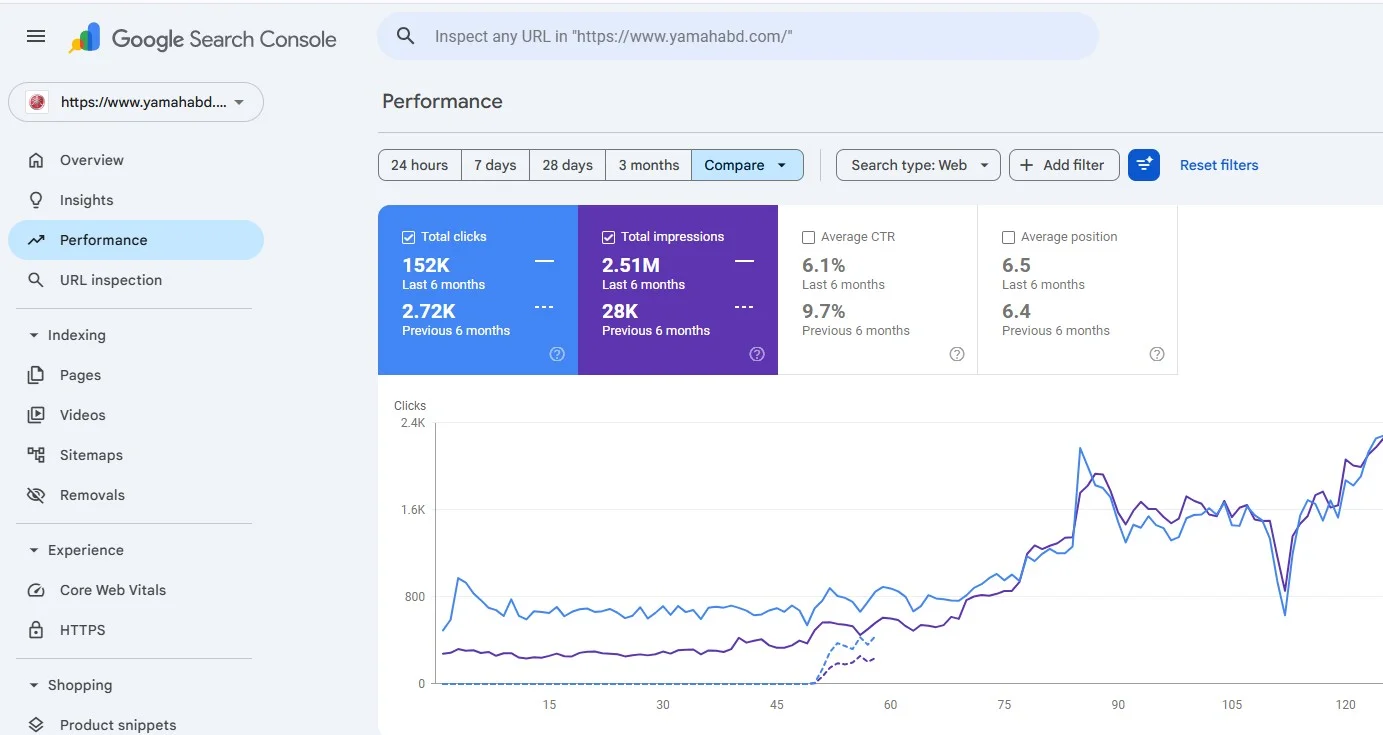
Ymaha SEO Result

Key Results (6-Month Comparison)

  • Total Clicks: 2.72K → 152K
  • Total Impressions: 28K → 2.51M
  • Average CTR: 9.7% → 6.1%
  • Average Position: 6.4 → 6.5

While CTR slightly dropped due to scaling visibility, the overall growth in traffic and impressions signals massive SEO success.

The Challenge

Before the SEO overhaul, Yamaha BD faced:

  • Low keyword visibility in search results
  • Limited indexed pages
  • Weak content targeting high-intent keywords
  • Technical SEO gaps affecting crawlability
  • Poor internal linking structure

Despite strong brand recognition offline, the website was underperforming in organic search.

Strategy & Execution

1. Technical SEO Foundation

The first phase focused on fixing backend issues:

  • Improved site speed and Core Web Vitals
  • Fixed crawl errors and indexing issues
  • Implemented structured data (schema markup)
  • Optimized mobile usability

Impact: Better crawling, indexing, and user experience.

2. Keyword Expansion & Mapping

A deep keyword research strategy was implemented:

  • Identified commercial, informational, and branded keywords
  • Mapped keywords to relevant landing pages
  • Targeted long-tail keywords with lower competition

Example:
Instead of just targeting “Yamaha bikes,” pages were optimized for terms like:

  • Yamaha bike price in Bangladesh
  • Best Yamaha motorcycle for mileage
  • Yamaha R15 specifications BD

3. Content Optimization & Creation

Content played a major role in scaling impressions:

  • Revamped existing pages with SEO-friendly structure
  • Added FAQ sections targeting featured snippets
  • Created blog content around buyer intent and comparisons
  • Optimized product pages with detailed specs and internal links

Result: Significant increase in indexed pages and keyword rankings.

4. Internal Linking Strategy

A strong internal linking framework was introduced:

  • Linked blogs to product pages
  • Connected high-authority pages to low-performing pages
  • Used keyword-rich anchor texts

Outcome: Improved crawl depth and keyword relevance signals.

5. On-Page SEO Enhancements

Each page was optimized with:

  • SEO-friendly titles and meta descriptions
  • Proper heading structure (H1–H3)
  • Image optimization with alt text
  • Clean URL structures

6. Performance Tracking & Iteration

Using Google Search Console and analytics tools:

  • Monitored keyword performance weekly
  • Identified high-impression, low-CTR queries
  • Continuously updated content based on performance data

Results Breakdown

Massive Growth in Visibility

Impressions skyrocketed from 28K to 2.51M, indicating:

  • Broader keyword coverage
  • Higher rankings across multiple search queries
  • Increased brand discoverability

Explosive Traffic Growth

Clicks grew from 2.72K to 152K, driven by:

  • Improved rankings for high-intent keywords
  • Better SERP presence
  • Optimized titles and descriptions

CTR Decline Explained

CTR dropped from 9.7% to 6.1%, which is normal when:

  • You rank for more broad and informational keywords
  • Impressions grow faster than clicks

This is a positive trade-off during scaling.

Key Takeaways

  1. Technical SEO is the foundation — without it, growth stalls
  2. Content + Keywords = Growth Engine
  3. Internal linking accelerates ranking improvements
  4. Scaling impressions is the first step; CTR optimization comes later
  5. Data-driven iteration is critical for sustained growth

Conclusion

The Yamaha BD SEO campaign proves that rapid organic growth is achievable with the right mix of technical optimization, content strategy, and performance tracking.

Going from a few thousand clicks to over 150K in six months is not luck—it’s a result of consistent, strategic SEO execution.

Project Scope

The Yamaha BD SEO project was designed as a full-scale organic growth initiative, covering technical SEO, content strategy, keyword expansion, and performance optimization.

The work started with a deep technical audit to resolve crawl issues, indexing problems, and site performance limitations. Improvements were made to Core Web Vitals, mobile usability, and structured data to ensure the website aligned with modern search engine requirements.

A comprehensive keyword strategy was then developed, targeting commercial, informational, and long-tail search queries relevant to the Bangladeshi motorcycle market. These keywords were mapped to existing and new pages to maximize search visibility.

Content optimization and expansion were a major part of the scope. Existing pages were improved with better structure, internal linking, and search intent alignment, while new pages and blog content were created to capture additional traffic opportunities.

On-page SEO enhancements were implemented across the site, including optimized meta tags, headings, URLs, and image attributes. Internal linking was strengthened to improve crawlability and distribute authority effectively.

The entire process was continuously monitored using Google Search Console, allowing data-driven decisions and ongoing optimization.

My Role

I worked as the SEO strategist and execution lead for this project, managing everything from planning to implementation and optimization.

My responsibilities included conducting the full SEO audit, building the keyword strategy, and defining a clear growth roadmap. I directly handled on-page optimization, content guidance, and internal linking improvements to ensure every page contributed to overall performance.

As a Best SEO Expert in Bangladesh and SEO Service provider, I also collaborated on technical SEO fixes, ensuring proper implementation and measurable impact. Performance tracking was a continuous process, where I analyzed data, identified opportunities, and refined the strategy to accelerate growth.

Through consistent execution and data-driven decisions, I successfully scaled organic traffic and visibility within a short timeframe.